
McGivney Propaedeutic House
Formation Team
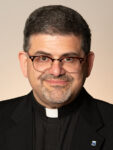 Rev. Robert Cro, P.S.S., M.A., S.T.B., M.Div., H.E.L.
Director
Fr. Robert Cro, P.S.S., is a priest of the Diocese of Trenton and a member of the Society of St. Sulpice. A native of New York, Fr. Cro attended archdiocesan schools before earning a B.A. with a dual major in Classics and Physics from Williams College, followed by an M.A. in Classical Archaeology from Princeton University.
Prior to entering seminary, he also taught overseas in Japan and worked as an educational technology specialist for a large university. After receiving his S.T.B. and M. Div. from St. Mary’s Seminary and University in 2012, Fr. Cro was ordained and served as a parochial vicar for three years before entering the Society of St. Sulpice.
Since that time he served as a Sulpician Candidate at Theological College (2015-2017), earned a Licentiate in Church History (H.E.L.) from the Gregorian University in Rome (2017-2019) and taught history at St. Mary’s Seminary and University (2019-2022) before returning to Theological College where he was the Dean of Men (2022-2026) and then also Interim Vice-Rector (2025-2026). In the late spring of 2026 Fr. Cro was appointed Director of The McGivney Propaedeutic House of Formation in Baltimore, Maryland.
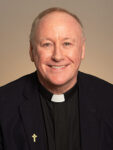 Rev. John McNerney, Litt, S.T.B., Ph.D.
Coordinator of Spiritual and Human Formation
Fr. John McNerney, a native of Ireland, earned his B.A., M.Litt., and Ph.D. (Philosophy) degrees at University College in Dublin. He earned his S.T.B. at the Gregorian University in Rome. Ordained for the Diocese of Dublin, his first ministry was as a high school Religion and Theology teacher, then as chaplain and student advisor, and later the head of the chaplaincy department at Dublin University College. There he was also lecturer in business ethics and philosophy, organizing major international conferences and events exploring religious, esthetical, and philosophical topics.
Fr. McNearney joined the Theological College community in 2022 as a member of the formation faculty and Director of Basselin Scholars, after serving at The Catholic University of America as visiting research scholar in the department of politics and the first Distinguished Michael J. Novak Scholar. At Catholic University, he was also a Fellow at the Art and Carlyse Ciocca Center for Principled Entrepreneurship and accompanying scholar for the Röpke-Wojtyła Fellowship, as well as a faculty scholar at the Institute for Human Ecology.
In the late spring of 2026 Fr. McNearney was appointed Coordinator of Spiritual and Human Formation at The McGivney Propaedeutic House of Formation in Baltimore, Maryland.
Course Descriptions
Seminarians in the McGivney Propaedeutic House will take three courses over the span of the Introductory, Fall, and Spring Periods. During the Fall and Spring Periods the courses each meet once per week for two hours. Rather than being primarily lectures, the courses emphasize the active participation of the seminarians. The classes are graded pass/fail and conclude with the seminarian writing a reflective essay incorporating his insights from the course. The courses are:
- Introduction to the Scriptures: Old and New Testaments
- Introduction to Catholic Doctrine: The Catechism of the Catholic Church I & II
- Introduction to Catholic Spiritual Life I & II
Introduction to the Scriptures
Introduction to the Scriptures: Old and New Testaments
The propaedeutic Scripture courses focus on gaining familiarity with the major figures and events of salvation history. The seminarians will read the entirety of the Old and New Testaments over the course of the year and will participate in seminar style discussions of the material.
By reading between 3 to 6 pages of Scripture a day, it is possible to read the whole of the Old and New Testaments in just 35 weeks. The link below will open a PDF file containing an example of a propaedeutic Scripture reading plan.
Introduction to Catholic Doctrine
Introduction to Catholic Doctrine: The Catechism of the Catholic Church I & II
After reading and discussing Part IV of the Catechism in the Introductory Period, the seminarians will read through and discuss Parts I to III over the span of the Fall and Spring Periods. The doctrine courses complement the Scripture courses, providing a structured understanding of the dogmatic and moral doctrine rooted in God’s self-revelation through the Incarnation, the prophets, and the apostles.
Over roughly 35 weeks the seminarians will read and discuss about 20 pages of the Catechism per week, in addition to certain other documents of the Second Vatican Council, other Councils, and the Church Fathers. The link below will open a PDF containing an example of the propaedeutic Catechism reading plan.
Introduction to Catholic Spiritual Life
Introduction to Catholic Spiritual Life I & II
Introduction to Catholic Spiritual Life I is organized thematically around various ways in which God mediates His presence to the seminarian through the Church and in the world. The seminarian will gain awareness of and confidence in the instrumental means through which God communicates Himself to the seminarian and to the world. The topics covered will include:
- Liturgical Prayer: Praying with and the Through the Mass.
- Praying with the Blessed Sacrament.
- Praying with the Sacred Scriptures: Revisited.
- Praying with the Blessed Virgin.
- Praying with the Angels.
- Praying with the Saints.
- Praying with the Church on Earth.
- Praying with the Sacraments: Baptism and Confirmation.
- Praying with the Sacraments: Penance.
- Praying with Time: The Liturgy of the Hours.
- Praying in View of Heaven: Eschatological Spirituality.
- Introduction to the Discernment of Spirits.
- Introduction to the Prayer of Faith/the Dark Night.
- Praying with Challenges to Faith from Modernity.
- Grace and the Spiritual Life.
- Consecrated Celibacy and the Spiritual Life.
Introduction to Catholic Spiritual Life II is organized historically, considering foundational Catholic spiritual writers and schools. This approach complements the first course, giving the seminarian confidence that he has been put into contact with the range of men and women whom God has blessed with particular insight into what is good and necessary to be a fruitful disciple of the Lord. Figures and schools discussed include:
- The Apostolic Age and the Early Martyrs.
- Eastern Monasticism.
- Augustine.
- Western Monasticism: John Cassian & St. Benedict.
- Gregory the Great.
- The Carthusians; St. Bernard.
- Norbert & the Canons Regular.
- Franciscan and Dominican Spirituality.
- The Mystics.
- Devotio Moderna & Thomas à Kempis.
- The Carmelites.
- Ignatian Spirituality.
- Francis de Sales.
- The French School.
- The Twentieth Century: St. Thérèse of Lisieux.
- Priestly and Lay Spirituality: A Reprise.